Welcome to the EnActe Family – Linh Phan – Sales & Marketing Manager

We would love for the whole EnActe community to welcome Linh Phan our new Sales & Marketing Manager

Some people find their next chapter through a job board. Linh Phan found hers in an Entrepreneurship class.

Linh comes to EnActe with a rich background in graphic design and marketing—and she’s currently pursuing her MBA at San José State University, sharpening her path toward a career in marketing management. But what brought her to us wasn’t a resume submission. It was a single, spark-of-a-moment in a classroom.

EnActe’s founder Vinita was invited by one of Linh’s MBA professors to guest-speak in her Entrepreneurship class. Vinita showed up, ran a lively workshop on pitching and presenting yourself with charisma—and left a lasting impression. Linh was captivated, not just by the energy in the room, but by the mission behind it. As an advocate and artist herself, she felt an immediate alignment with what EnActe stands for. So she reached out to Vinita directly, and the rest, as they say, is history.

At EnActe, Linh hopes to grow toward her dream career in tech product marketing; but her motivation runs deeper than professional milestones. She’s always been drawn to art that tells cultural stories and amplifies underrepresented voices. EnActe’s mission doesn’t just complement her career goals; it reflects who she is.

And what a way to start. In her very first week, Linh was thrown straight into the heart of UNSTITCHED—a stunning collaboration between EnActe Arts and the Asian Art Museum in San Francisco, woven together with curators, models, dancers, and volunteers to create something truly unforgettable. Here’s how she put it:

“WHAT A WEEK! It escalated quickly from getting to know everyone, getting to know the different meaningful programs at EnActe—to executing a fast-paced 1-week prep for UNSTITCHED. The day of the event was on Sunday; yet many of the team members showed up and gave it their full effort—that just showed me how passionate and aligned everyone is in this organization. The exhibition, the sarees, the stories told, and the fashion show were simply breathtaking. I almost cried! It was so beautiful to see people in the community show up to make a difference for their own community, and to see how art can connect everyone.” — Linh Phan


Welcome to the EnActe Family – Douglas Graham – Associate Artistic Director

We would love for the whole EnActe community to welcome Douglas Graham as our new Associate Artistic Director!

Douglas Andrew Graham has spent his life in and around the theatre — as an actor, an educator, a founder, and a storyteller. Originally from Kansas City and a graduate of Drake University with a BFA in Acting, Douglas launched his career with The Atlanta Shakespeare Company, where he worked as both a performer and education artist.

From there, his stage credits grew to include celebrated companies like The Alliance Theatre, Dad’s Garage, Horizon Theatre, and others across Atlanta and Seattle.

But Douglas has never been content to stay only on stage. In 2012, he founded The Fern Shakespeare Company and stepped into the role of Producing Artistic Director—developing year-round programs, directing beloved plays like A Midsummer Night’s Dream, The Tempest, and Twelfth Night, and building theatre outreach initiatives from the ground up. He’s also a voice-over actor, playwright, and amateur photographer. In other words: a true creative through and through.

So what brought someone with such deep roots in classical Western theatre to EnActe? For Douglas, it came down to shared values across different worlds.

“I’ve always had a passion for learning and experiencing new things,” he says. “EnActe provided the opportunity to immerse myself amongst people whose culture was very much not my own, and yet our view on theatre aligned so strongly.”

His belief in new works, emerging playwrights, and the central role of theatre education found a natural home here — and that alignment made the decision easy.

Looking ahead, Douglas’s vision for his role is as much about people as it is about productions. He wants to help build a community — not just within the theatre, but in the broader sense of the word.

“I don’t want to succeed at my neighbor’s expense,” he shares. “I have always believed that theatre and the arts have the ability to bring us all closer together. It is a universal language.”

And UNSTITCHED, his very first event at EnActe, put that belief to the test — and then some. Standing in an exhibition celebrating the sari, a garment far outside his own cultural experience, Douglas found himself discovering an unexpected and deeply personal connection:

“I was honestly just so honored and excited to be a part of this incredible exhibition that is so far removed from the culture that I know and grew up with. Despite the sari not being part of my culture, I was able to recognize the common bonds that unite us together. As someone who has a Scottish lineage, I recognize the importance of the saris much in the same way that tartans carry importance to the Scottish people — so very similar not only as an article of clothing, but also in its history, culture, and as a target of suppression in attempts to rid a people of their heritage.” — Douglas Graham


Launching EnActe NYC Incubator & South Asian Collective in NYC

The national theatre landscape is undergoing a transformative shift, and EnActe Arts is at the forefront with the launch of its EnActe NYC Incubator. This initiative marks a significant milestone for South Asian theatre-makers and cements EnActe’s presence in New York City, the epicenter of global arts and culture. The launch of this incubator not only celebrates the vibrant diversity of South Asian stories but also fulfills the critical need for a platform dedicated to nurturing these voices in one of the most competitive theatrical markets in the world.Why New York City Matters

For a national theatre company like EnActe Arts, establishing roots in NYC is not just strategic—it’s essential. The city’s unparalleled energy and cultural richness offer an ideal backdrop for fostering innovative artistry. With luminary Aroon Shivdasani joining the advisory board, EnActe NYC is poised to harness the city’s vast network of talent and resources to spotlight South Asian creativity.From Broadway to off-Broadway, NYC sets the gold standard for theatrical excellence. By making its mark here, EnActe aims to produce cool, cutting-edge productions that resonate with global audiences while creating a space for the next generation of South Asian artists to flourish.The Mission: Building a Collective and Incubator for South Asian TheatreThe EnActe New York Collective is the first-of-its-kind platform designed specifically for South Asian actors, musicians, directors, and designers. Its mission is twofold: to build a professional community for theatre-makers and to provide the developmental resources they need to thrive.Within this collective lies the New Works Incubator, a focused initiative to develop and elevate original plays and musicals centering South Asian narratives. Each year, the incubator will select one play and one musical for development, providing these projects with dedicated rehearsal time, professional direction, and a culminating staged reading in the heart of NYC. By doing so, the incubator not only breathes life into new works but also strengthens the pipeline of authentic South Asian stories reaching broader audiences.Programming: A Hub for Connection and Creation

The Collective operates on a sweat equity model, encouraging active participation from its members. Through monthly mixers, writers’ workshops, and table readings, the program offers ongoing opportunities for South Asian theatre-makers to showcase their work, receive feedback, and collaborate with peers.

Highlights of the programming include:

Monthly Mixers: Casual gatherings where artists share work, network, and discuss industry trends. These mixers alternate between in-person and virtual formats to maximize accessibility.

Writers’ Workshops and Table Reads: Opportunities for playwrights to present material, receive constructive feedback, and engage in creative discussions.

Masterclasses and Mentorships: Sessions led by renowned theatre professionals, offering invaluable insights and guidance to emerging talents.

Sweat Equity System: Members earn the right to present and participate by contributing to the collective’s activities, fostering a culture of mutual support and collaboration.

The New Works Incubator’s open submission process ensures inclusivity while maintaining high standards of artistry. Selected projects will undergo a 15-hour rehearsal process over two weeks, culminating in public staged readings. By providing directors, actors, musicians, and rehearsal space, the incubator ensures a professional environment for artists to refine their work.

For playwrights and composers, this means seeing their stories come to life for the first time. The incubator also offers opportunities for collaboration, rewrites, and professional networking—all essential for building a sustainable career in theatre.

The Bigger Picture

As one of the few national theatre companies with a dedicated presence in NYC, EnActe Arts’ NYC Incubator fills a crucial gap in the artistic ecosystem. It’s more than a program; it’s a movement to uplift South Asian voices and redefine their place in the American theatre canon.

With visionary leadership, an inclusive mission, and robust programming, the EnActe NYC Incubator is set to inspire, connect, and propel a new generation of storytellers. This initiative is a clarion call for all who believe in the power of theatre to reflect and reshape our world—starting with the vibrant, untold stories of South Asia.

Sustainable Artistry: Making Theater that Enriches, Protects and Amplifies the Community

Diversity, Equity, Accessibility and Inclusion – or DEAI – a now familiar acronym thanks to the tireless work of organizers, thought-leaders and activists. Large corporations are holding company-wide workshops, public schools are negotiating with community politics to bring this infrastructure into schools, theaters are radicalizing the artistic process and committing to a more accessible environment – in every sphere the language and learning of the past few years is starting to see traction.

A 10 year old arts institution founded in the Bay Area, EnActe has been serving local communities for years, providing classes, safe spaces, community discussions, and thought-provoking theater that promotes inclusion and models vigorous commitment to DEAI.

As a company focused on uplifting South Asian stories in a global context, we often find ourselves negotiating the line between preaching, teaching and doing our own learning and growth. Producing new works means making sure we are using our resources to bring in the most qualified people in the room, and creating an environment that is safe for vulnerability and conflict. It also means understanding that the “traditional” structures of business and creativity might not always work – we draw from the existing frameworks but make sure to de-“capitalize” them and make it our own.

Conflict is something theatermakers should be good at – the impetus for all good plays is a core conflict, and the work of the creatives is to discuss the conflict implications in the room before presenting it to audiences, i.e., we need to know where we stand so that the work we present has something to say. Navigating those conversations so that they are productive, kind and generative is a special skill, and we have certainly learned more and more about how to do it effectively.

Most of our creative work is focused on the ensemble, and taking your time. “Process above product” has led us to be a company that is enjoying the fruits of planting deep roots and nurturing every stem. We are a talent incubator, driven to give opportunity to marginalized talent early in their careers – and our alumni list speaks for itself. Our projects are always ambitious, and we push ourselves, but at the end of the day the question we are asking isn’t “is this what the people want to see” but rather “is our art asking questions that people will ponder the next morning?”.

We also work to model ideal representation and process and not just discuss it – our creative teams and actors fall on a vast spectrum of identities and are given agency and voice – that makes our work intentional rather than tokenizing, shallow, and harmful. In our current touring production of The Jungle Book: Rudyard Revised, the most impactful lesson is that community learns from each other, often from its youngest, and that diversity is the key to sustainability and survival.

In many ways The Jungle Book: Rudyard Revised is a way to understand the core principles of EnActe and the work we’ve done to get here. By far our most ambitious project to date, the strength of our community web is what has fostered its growth and success. 

The script itself was written by students of the EnActe Conservatory, many of whom have grown (or grown up!) as part of the education and cultural inquiry practiced in our program. Longtime EnActeurs with a strong sense of self and ensemble came together to write the script, spanning age, race, gender and experience. 

The messaging in the revised version is also in deep conversation with what the writers were experiencing as they wrote it – Black Lives Matter, global warming and climate change, refugee crises and a rise in nationalism and cultural othering. Feeling the authenticity of all these varied voices speaking together through a beautiful script, performed by actors of a similarly diverse background, makes for a really clear representation of what can be accomplished when intentional steps are taken to diversify who is telling the story and how. 

The creatives involved with the production are of a similar cutting-edge, genre-defining background. The music is by George Brooks, someone who has spent his life among two cultures, using his privilege as a white male musician as an allyship tool to build bridges between the Jazz and Indian Classical community, and increasing the cultural fluency and comfort among both cultures of the other. 

Navarasa Dance Theatre uses a combination of physical movement techniques that both choreographers are trained in. Kalaripayattu and Yoga are art forms that – in the case of Kalari – have either been lost except for a few trained masters, or – in the case of Yoga – are so abundantly represented that it can sometimes feel appropriated or in some way undervalued. Using these ancient techniques to make something new and then putting that choreography on such a vast diversity of bodies is an act of rebellion, joy, and pushing for a future where we have learned from the past.

Art imitates life, or so they say – our art imitates science! The Jungle Book: Rudyard Revised was in part inspired by the work of conservation scientists and biodiversity experts at the Centre for Wildlife Studies in India. As we read research by them, and listened to talks by their director Dr. Krithi Karanth, we realized that everything – art, society, the environment – is interconnected. 

In the same way that increasing the diversity of a jungle enriches the soil, balances the world and drives evolution, so too does diversity in a creative process generate fresh ideas, ground the work in truth, and foster innovation and creativity. When work like that is presented to a vast audience, society at large can benefit from the abundance of a community steeped in diverse connections and conversations. 

We were recently honored with a grant that supports organizations that are doing work to Stop Asian Hate. That resonated so deeply with us, and it was very affirming to know that people understand the importance of the work we do in protecting communities – including the AAPI community in the Bay Area.

We will never stop keeping EDIA work in every step of our process, because the end results are by definition a product of that and echo those same values. Our job is to stay honest, energized and open – constantly doing the learning first so that we can show and not tell to our audiences through productions that inspire change, palpable or not.

The act of generating empathy is work in preventing hate. The act of representation dismantles hate. The act of championing underrepresented voices pokes holes in racist ideas of a monolithic race and cultural generalizations. The act of giving space, attention and resources to a large diversity of people can transform hate into questions and learning. Our revolution is speaking our truths and beliefs loud and serving them on a conversation-inducing, visually stimulating, empathy-generating platter. 

‘Jungle Book’ gets a 21st-century reboot in Palo Alto by EnActe Arts

By just about any measure, Rudyard Kipling is way out of sync with contemporary culture.

Born in Bombay (now Mumbai) during the first decade of the British Raj, the English novelist and poet has come to embody the colonial enterprise, though his love of India wends through many of his best known tales. Can his work still speak to a post-colonial world?

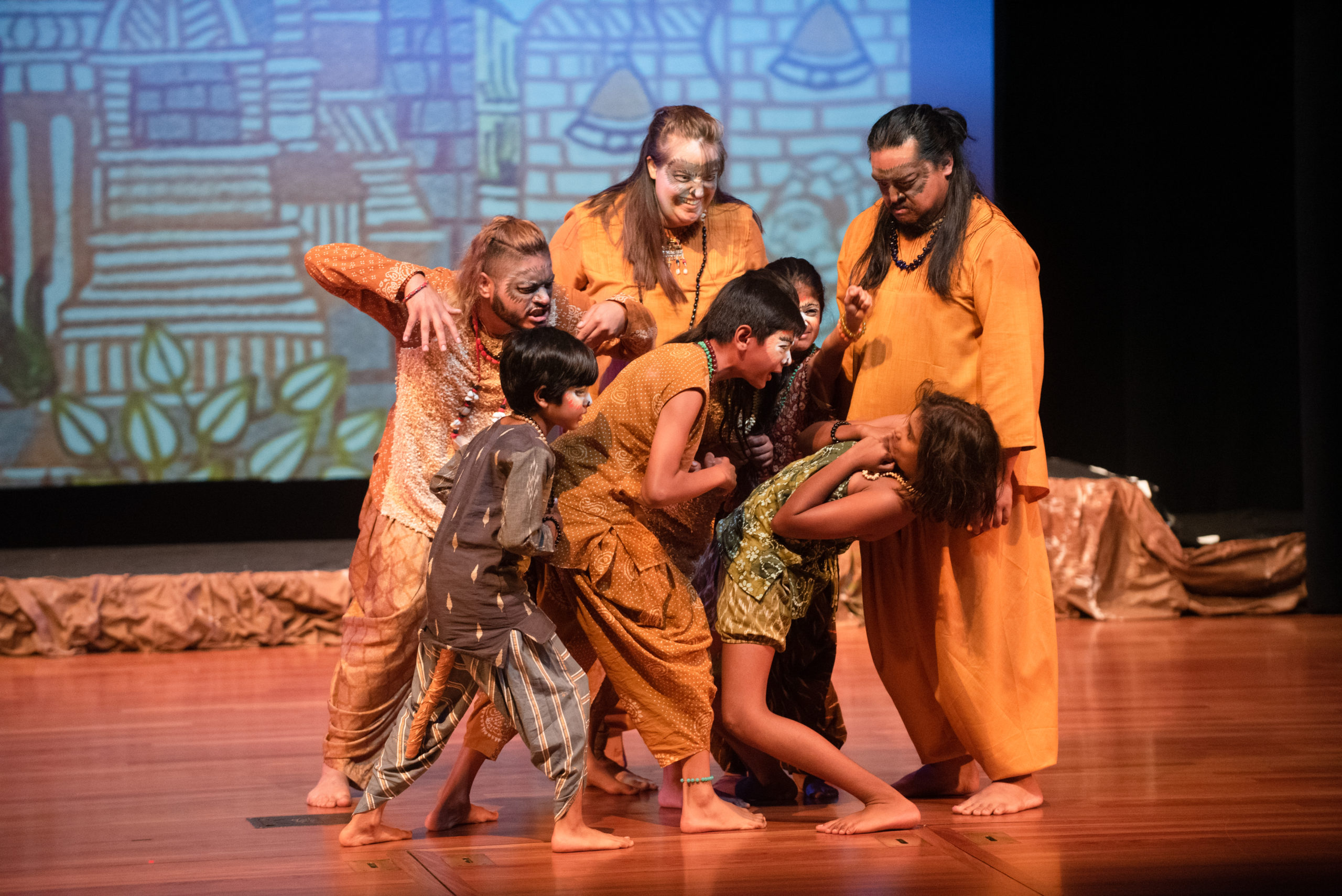
An ambitious new play by Sunnyvale-based EnActe Arts, “The Jungle Book: Rudyard Revised,” gives Kipling the opportunity to reconsider the arc of his beloved 1894 novel, which spawned Disney’s popular 1967 animated film. Created in collaboration with The Centre for Wildlife Studies, the production not only reimagines “The Jungle Book” from the perspective of the animals, it repatriates the story by telling the tale via classical Indian dance and music.

“No one teaches Kipling anymore because he got labeled a racist and colonialist,” said EnActe artistic director Vinita Sud Belani, the play’s director. “But he was a very complex person who was in love with India. It was the only place he felt at home. So we made him a character in our story, which is really from the point of view of the jungle and the tiger.”

Launched a decade ago by Belani, a veteran high-tech executive and actor, EnActe Arts is making a bold play to leap from regional to national (and international) stages with “The Jungle Book: Rudyard Revised.” After the production premieres at Palo Alto’s Sept. 30-Oct. 2, it plays two weekends at San Francisco’s Cowell Theater (Nov. 11-13 and 18-20) and San Jose’s Hammer Theatre Center (Dec. 2-4 and 9-11). The goal is to take the production on the road, eventually reaching South Asia.

Playful in repartee but serious about the ecological challenges facing India’s jungles, the script was developed over several years at the EnActe Conservatory through a collaborative process involving 14 writers spanning some three generations. Kipling makes an early appearance in the play, when he’s upbraided by the peacock Mayur who resents being left out of the original story despite his status as India’s national bird.

The story still features many of the treasured characters — the bear Baloo, the jungle-raised boy Mowgli, and Kaa the snake played by Chennai, India-based guest star Anita Ratnam — but instead of a plot driven by the tiger Shere Khan’s pursuit of Mowgli the play refocuses the narrative on humanity’s desecration of the jungle and the hunting of tigers to near-extinction.

“Everything that Kipling wrote is there,” Belani said. “He was a beautiful writer, and we did not see any reason to dissociate ourselves from his work as a human being. It’s very much Kipling’s stories, and the music is his poetry.”

In bringing Kiping’s writing to the stage, Belani assembled a powerhouse creative team, including Anil Natyaveda, a choreographer, dancer, and expert in the martial art of Kalaripayattu; and choreographer Aparna Sindhoor, a master of Bharatanatyam, the southern Indian classical dance tradition. Natyaveda and Sindhoor are co-artistic directors of the recently formed Navarasa Dance Theater in Los Angeles.

The score was created by Berkeley saxophonist George Brooks, who has spent the past three decades collaborating with the greatest figures in North and South Indian classical music. Recording the music in his studio during the pandemic “took my skills as a home producer to new levels, as well as working with lyrics, which is not something I do in my own work,” he said.

Creating themes for many of the characters, he captures the jittery energy of the monkeys and Kaa’s hypnotic hiss with soprano saxophone doubling with the Indian double reed shehnai.

“Baloo’s theme is pretty jazz with tenor sax,” Brooks said. “The play opens with ‘Introducing the Jungle,’ which has an almost Afrobeat horn section. It’s Indian folk rhythms, but when you get to that energy level it’s not that different.”

Brooks is featured in a series of high-profile events around the region in the coming weeks, including a performance with “Jungle Book” choreographer Sindhoor and her Navarasa Dance Theater featuring her new dance/theater work “The Naked Line” Oct. 8 at the Yerba Buena Gardens Festival. On Oct. 9 his quartet with raga pianist Utsav Lal performs twice, first as part of the 15th SF Music Day and later that day at the Jazz In the Neighborhood’s Paul Dresher Studio series in West Oakland. And on Oct. 16 he joins the quartet of Carnatic guitar star Prasanna at Montalvo Arts Center (they also perform as a duo Oct. 15 at the Oaktown Jazz Workshops).

Original article at: https://www.mercurynews.com/2022/09/28/jungle-book-gets-a-21st-century-reboot-in-palo-alto-by-enacte-arts/

‘The Jungle Book’ gets a thoughtful update

At this point “The Jungle Book” is more associated with happy-go-lucky singing animals from the animated 1967 Disney film than the actual late 19th-century book of the same name that was the movie’s source. But Sunnyvale-based theater company EnActe Arts took “The Jungle Book” back to the page — and made some updates for modern audiences that aim to return the story to its South Asian roots.

EnActe is presenting “The Jungle Book: Rudyard Revised,” Sept. 30-Oct. 2 at Palo Alto’s Cubberley Theatre.

The company adapted stories from the book by British author Rudyard Kipling. The stories, set in a tropical forest in India, tell of how human boy Mowgli is raised in the forest by wolves and grows up with a family and friends made up of anthropomorphic animals.

This revised telling was a year-long project of EnActe Conservatory, the company’s advanced theater program for youth and adults. A team of writers of all ages worked on the script, looking at how to tell the stories from a contemporary sensibility. As Vijay Rajan, script consultant for the production, said in the show’s video trailer, “the most problematic thing with ‘The Jungle Book’ is that the original basically espouses that people belong with their own kind. And that was the ultimate message we wanted to eliminate in ‘Rudyard Revised.’”

Additionally, with tigers now an endangered species, the show updates the notorious tiger Shere Khan from a villain to a more empathetic character.

Help sustain the local news you depend on.

Your contribution matters. Become a member today.

Join

EnActe Arts co-founder and Artistic Director Vinita Sud Belani directs “The Jungle Book: Rudyard Revised.” The production features a special guest appearance by dancer Anita Ratnam, who has traveled from India to perform in the production.

The show’s music by saxophonist and composer George Brooks brings together jazz and Indian classical music and the choreography by Aparna Sindhoor and Anil Natyaveda of Navarasa Dance Theatre combines classical Indian dance and martial arts.

EnActe has also partnered with the Centre for Wildlife Studies, based in Bangalore, India, to share information about tiger conservation and highlight their work.

After completing its run in Palo Alto, “The Jungle Book: Rudyard Revised” will be touring the Bay Area this fall, with stops in San Francisco (Nov. 11-13 and 18-20) and San Jose (Dec. 2-4 and 9-11).

“The Jungle Book: Rudyard Revised” runs Sept. 30, 7 p.m., Oct 1 at 2 and 7 p.m. and Oct. 2 at 2 p.m. at the Cubberley Theatre, 4000 Middlefield Road, Palo Alto. Tickets start at $25. For more information, visit enacte.org.


See original Article Here: https://www.almanacnews.com/news/2022/09/28/the-jungle-book-gets-a-thoughtful-update#.YzUjfMa0gDc.twitter

This Fall EnActe Arts is opening its most ambitious production to date – THE JUNGLE BOOK: RUDYARD REVISED

This Fall EnActe Arts is opening its most ambitious production to date – THE JUNGLE BOOK:RUDYARD REVISED

When Indiaspora member Vinita Belani founded Enacte Arts in 2013 to bring Jean-Claude Carriere’s legendary re-telling of the Mahabharata to American audiences, she established a fundamental principle that has guided the theater company ever since: reimagine the canon of South Asian stories in a universal context. Now, with thirty seven diverse productions and a global pandemic behind it, EnActe is about to reimagine one of the world’s best-loved stories: Rudyard Kipling’s The Jungle Book.

Kipling’s classic is ostensibly about an adorable kid, an evil tiger, and a heartbreaking choice to belong to one, and only one world: either the jungle or the village. The Jungle Book is thought of as a tale with all the dramatic elements of good versus evil. But does it have to be? Is the tiger evil or just misunderstood? Is there a way for Mowgli to be a resident of both the jungle and the village? What would a jungle-village coexistence look like?”

EnActe took this question to the 2020 cohort of their EnActe Conservatory – an established, one year program for advanced theatre makers of all ages. At the height of the pandemic, fourteen writers aged 6 to 66 spent three months in a Writer’s Room on Zoom. They pored over the original writings of Kipling against a backdrop of the Black Lives Matter movement, tiger extinction concerns, raging wildfires decimating forest land and debates on BIPOC representation in the arts. They re-examined the work through a contemporary lens of coexistence and tolerance, belonging and identity, and animal conservation and rights. The result is The Jungle Book: Rudyard Revised, reclaimed, reimagined, and rewritten for our times.

Vijay Rajan, filmmaker and then Head of Education at EnActe, says, “the most problematic thing with the original Jungle Book is that it espouses the notion that people belong with their own kind. That was the ultimate message we wanted to eliminate.” This belief in multicultural coexistence — perhaps shaped by the fact that many of the writers in the Enacte collective are immigrants for whom this is a lived experience  — pervades and animates the revised play.

It is not just that Kipling was no champion of such harmony. Since the height of his popularity, he has been called (credibly, many would say) a racist and an imperialist warmonger.

In a bold and generous turn of innovation — which Kipling, the traditionalist, would perhaps have disapproved of — the play casts the great author himself as a character. It recreates him as a storyteller of our times. This forces the audience to ask themselves how much of his vastly complicated views were his own and how much were they a product of his time.

The Jungle Book:Rudyard Revised extends such generosity not just to the author but to one of the most villainous characters in literature and Disneydom: the evil tiger Shere Khan. Now thoughtfully named Sher Baagh, he is portrayed with a nuance and sympathy absent from the original. Karsten Freeman, who plays the tiger, says, “The tiger is in a lot of pain because he’s the only one left.” It is a simple point. But it hits hard. In a world where the majestic creatures are nearing extinction, it is powerful and moving.

This makes it the perfect vehicle for showcasing the work of and fundraising for the Centre for Wildlife Studies, headed by frequent Indiaspora speaker Dr Krithi Karanth, who will be traveling with the show and speaking about tiger conservation and the uphill task of bringing the tiger back from the brink of extinction.

As the play swings between the jungle and the village, between animals and humans, it reflects another core principle at EnActe: that music and dance are inseparable from plays, a belief that traces its roots to the ancient Sanskrit treatise on the performing arts, The Natya Shastra.

In line with the theater company’s embrace of Eastern and Western traditions of storytelling, the lush music in Rudyard Revised is composed by acclaimed saxophonist George Brooks. Brooks is renowned for blending two of the great improvisatory traditions in world music: jazz and Indian classical music. He says that he “looked to Raaga, the modal approach to Indian melody, to set up the sonic environment of the play.” For the rhythmic pieces that he composed for the jungle scenes, it must have helped that he has visited India many times and “walked the jungles with the monkeys chattering at me.”

The music is brought to vibrant life by choreographers Aparna Sindhoor and Anil Natyaveda, of the Navarasa Dance Theater. Like Brooks, they blend different traditions to juxtapose and move between the village and the jungle. Aparna is an exponent of the classical Indian dance Bharatanatyam, appropriate for the human scenes. Anil is an exponent of Kalaripayattu, the ancient Indian martial art that suitably incorporates graceful animal movements, and both have choreographed for great American shows like the Cirque du Soleil.

Vinita, the Artistic Director insists that every EnActe play must break ground in some way. The Jungle Book: Rudyard Revised brings together traditional and postmodern ways of storytelling, the great traditions of South Asian and American music, and movements inspired by classical dance and martial arts. It does so while keeping all of Kipling’s fascinating characters and riveting storyline, yet making the rich texture feel more authentic. It succeeds in amplifying South Asian voices. More impressively, with this play, the theater company continues to realize another of its key guiding principles: “to celebrate the past, be mindful of the present, and give voice to the future.”

Even Rudyard Kipling, that arch-conservative, would have approved!

The Jungle Book:Rudyard Revised is starting the first leg of its National Tour in the Bay Area and Houston. Show dates –

Palo Alto – Sept 30th – Oct 2nd, Houston – Oct 8th, 9th, San Francisco Nov 11th -20th, San Jose Dec 2nd – Dec 11th.

Original article @ https://indiaspora.org/the-jungle-book-rudyard-revised/

A Conservation Conversation with Dr. Krithi Karanth

It was a fresh morning in Bangalore and Dr. Karanth was glowing. Meanwhile, in my New York apartment, I grinned out from the shadows of a poorly lit Zoom window at 11pm. But let me tell you – after the conversation we had – it was hard to go to sleep! I was feeling inspired and ready to do my part to repair our relationship with the wild places on our planet. 

Dr. Krithi K. Karanth is the Chief Conservation Scientist & Executive Director at the Centre for Wildlife Studies. Dr. Karanth is also Adjunct Faculty at Duke and National Centre for Biological Sciences. She has a Ph.D. from Duke (2008), a M.E.Sc from Yale (2003) with B.S and B.A degrees from the University of Florida (2001). She has also completed executive education courses at Harvard, Oxford, and Stanford.

Her research in India and Asia spans 24 years and countless fields – she has published 100+ scientific and pop-journalism articles engaging and educating people about the necessity of a more concerted effort towards conserving our wild places. She also mentors young scientists and recruits hundreds of volunteers to come help CWS on the ground.

Don’t let that list overwhelm you! Dr. Karanth is a down to earth (pun intended) hands-on researcher committed to finding realistic, accessible pathways to the conservation of wild animals and wild places in India. 

I talked to her about how the arts can work with the sciences, and she was effusive in her belief that without proper storytelling – without making people see and understand and feel that this work matters – often science alone will fall short of creating lasting, real change. Did we mention that Dr. Karanth is a National Geographic grantee and 2012 NatGeo Explorer? She said that being associated with NatGeo helped her realize the power of visual and narrative storytelling. 

We are thrilled to partner with Dr. Karanth and CWS as part of our tour of The Jungle Book: Rudyard Revised. In our script the tiger – Sher Baagh – is re-characterized as a traumatized victim of tiger poaching. This contextualization of the character’s actions feels like a storytelling release – finally, he feels real and approachable. Giving Sher Baagh this dimensionality is a core part of what our production is trying to accomplish – and it is totally in line with what CWS does in so much of its outreach and education. 

Helping communities that live right next to wild jungles is a big part of the CWS mission – finding a way back to coexistence and harmony – to see if our Jungle and Village are able to do the same you’ll just have to come see the show. 

Hear from Dr. Karanth about our collaboration!

The Centre for Wildlife Studies uses many tools to engage with a diversity of populations. The environment impacts us all – though as always the effects of climate change and environmental collapse are felt first by our community’s most vulnerable. 

For a more global engagement, CWS has created videos, films, books, and even children’s books so that the diaspora can understand the immediate need for change and action as well as develop empathy and care for the natural world. 

On the ground, CWS has created programs like Wild Seve, Wild Surakshe, and Wild Shaale. Wild Seve serves people who are living in close proximity to wild places and can have negative conflicts with animals there – established as a hotline, Wild Seve staff are dispatched to help mediate the situation as well as ensure that the affected people receive proper compensation and care. 

This helps foster productive dialogue and prevents building resentment towards wild animals – it also helps with the complications that these communities often face when dealing with the government, since CWS manages all of that interaction. Over time, this is a model for a healthier way to coexist with the environment.


Wild Surakshe focuses on disease-prevention and public health training for these communities to show how they can live in greater safety.

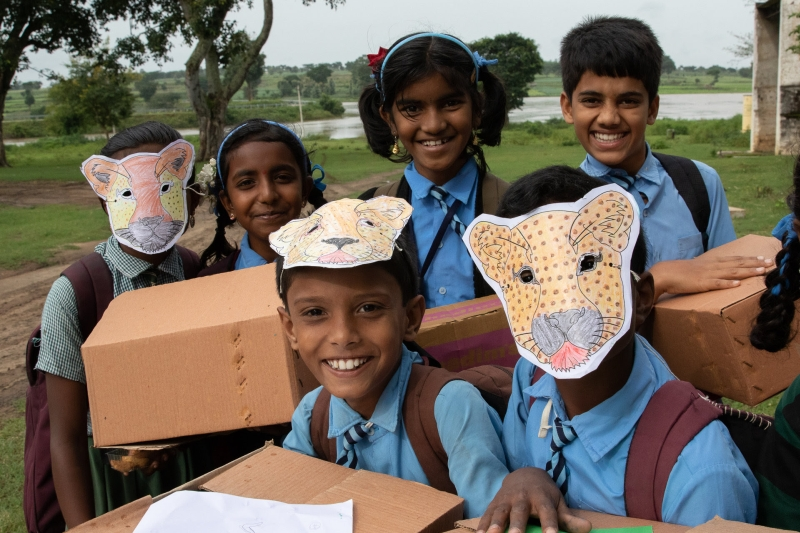
Wild Shaale is also an education focused program – this time for children. Often, children growing up in close proximity to wild places can develop trauma as it relates to wild animals. Wild Shaale works to repair that and shows children how they can develop a healthy curiosity and empathy for nature.

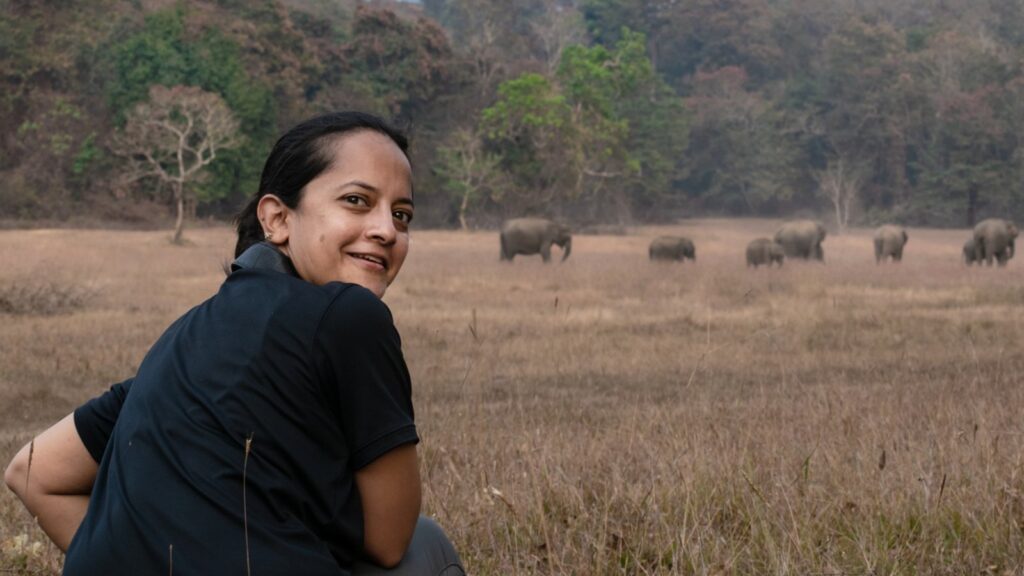
I asked her about how people can get involved – honestly, I asked how I could get involved! – and her immediate response was “Come to Bangalore and give us your time!”. As celebrated and decorated as she is as a researcher, her core is still in the jungle where as a 2 year old she hung out with her first tiger and elephant. 

When I told her that the plane ticket and the jetlag might not be possible for me, she mentioned that CWS is always looking for more partnerships in unique circles (like the theatre!). I realized, as I thought through my various pursuits, just how close environmental concerns are to almost every field of work. 

So to all of you tech CEOs, small business owners, instagram influencers, construction workers, multi-hyphenate actors, and beyond – if you want to learn more about CWS and how you can get involved, explore their website at cwsindia.org and get in touch! 

Finally, buy your tickets to see The Jungle Book: Rudyard Revised! And make sure you come early for the Tiger lobby exhibit, then stay late for the post-show talkbacks with the incredible Dr. Krithi Karanth.

The Jungle Book As You’ve Never Seen It!

“In the original version the tiger is the bad guy. In ours he is not,” – Director Vinita Sud Belani

A blur of arms, hands and voices could be seen and heard in the basement living area of a Saratoga home. Rehearsals were in progress for EnActe Arts upcoming production of “The Jungle Book: Rudyard Revisited” which premieres on Sept. 30 evening at Cubberley Theatre in Palo Alto, California.

Directed by EnActe Arts co-founder Vinita Sud Belani and Noah Lucé, the play features music by George Brooks, choreography by Aparna Sindhoor and Anil Natyaveda, costumes by Oona Natesan, Madhubani artwork by Leenika Beri Jacob and Avinash Karn. The production also features guest artist and dancer Dr. Anita Ratnam, from India.

The Jungle Book was written by Rudyard Kipling, who was born in India and considered it home, despite his time in England. Kipling wrote the story after reading a news article about a young boy, Dina Sanichar, who was raised by wolves. The Enacte Arts production takes a new look at the text and imagines it in a very different way.

EnActe Art’s mission is to represent South Asian stories and voices by putting them in a global context. “I wanted us to be telling stories that we could reclaim because they had either been appropriated or colonized or you know, told incorrectly,” says Belani.

“The Jungle Book is a classic children’s tale told all over the globe – and now we are reclaiming that Jungle using authentic South Asian storytelling techniques, like our Madhubani painting and Indigenous costumes,” she says.

Associate Director Noah Lucé, who is also Manager of Education for the EnActe School of Drama underscores this point. “Kipling is an actual character of this, and he has to confront some of his past wrongdoing as he sees it to revise his tale. And I think that’s a really beautiful message to put out there that we can look at old texts and still find wonderful meaning in them. And also realize that from a modern lens, we can call out the issues of the past, but it doesn’t necessarily devalue the entire text.”

Pandemic Delays

Belani started this project in 2019 as part of the EnActe Conservatory program. Fourteen students, the youngest age 6 and the oldest 66 worked on the script together.

It was then workshopped and turned into a ciné play during the height of the Covid Pandemic. The Omicron variant caused further delays to the show’s premiere, “so this is our fourth attempt, and third production of the script.”

This rehearsal at Belani’s friend’s home was the first time many of the cast were meeting each other.

Dr. Anita Ratnam as Kaa

Sounds of the cast singing “the jungle law” reverberate up the basement floor staircase onto the patio where Dr. Anita Ratnam sits, partially dressed as Kaa, eyes rimmed in kohl. A long extension of her hair is wrapped in sparkly gold thread, emphasizing her snake-like movements.

“I think of Kaa as a really feminine character – and I decided that she is not going to be a python, she is going to be a cobra,” said Ratnam, speaking at the character development for Kaa. “Cobras are mystical, they are timeless, they are ancient, and they kind of link for us between the animal world and the spirit world. And in India, we don’t kill snakes.”

Unlike the Disney animated version of Kaa, which is what most people are familiar with, the Kaa in Kipling’s story and particularly in this revision has much more depth. “She actually saves Mowgli on more than one occasion from the tiger. And then she says ‘you have to choose what are you and who are you?’,” says Dr. Ratnam.

“I think that her role is both quiet but also very powerful. She opens the show and she ends the show. She has the first sound and then she has the last word.”

A Walk Through The Jungle

Dance and movement is a big part of the play and drives the story and character. “The choreography is totally integrated into the production, rather than just come and go,” says Aparna Sindhoor.

Kalarippayuttu, martial arts, bharatanatyam, folk dances and animal movements inspired the choreography, along with the music of George Brooks.

“We are kind of trying to embellish the movements with symbolic gestures of animals,” continues Sindhoor. “We make our own style of movement, using different techniques.”

Tiger Conservation

Part of reclaiming the narrative includes a collaboration with Dr. Krithi Karanth, Executive Director and Chief Conservation Scientist for Centre for Wildlife Studies in Bengaluru, India.

Belani was inspired by a talk by Dr. Karanth and her father on tiger conservation several years ago which sparked the idea of reimagining The Jungle Book. The show will be a fundraiser for the center. Dr. Karanth will be speaking at every show, and along with bringing books for children, there will also be an exhibit.  

 “In the original version the tiger is the bad guy, and in ours he is not,” said Belani.

“The Jungle Book: Rudyard Revised” adapted by EnActe Arts, directed by Vinita Sud Belani and Noah Lucé with music composition by George Brooks, premieres on Sep. 30 at Cubberley Theatre in Palo Alto, CA for a 3-day run. Further shows are scheduled for Houston, San Francisco and San Jose. Tickets available via EnActe Arts.


This story was produced in partnership with CatchLight and [  third party, if applicable  ] as part of the CatchLight Local Visual Storytelling Initiative. To learn more about this collaborative model for local visual journalism, sign up for CatchLight’s newsletter.

Orginal article @ https://indiacurrents.com/the-jungle-book-as-youve-never-seen-it/

Reimagining Kipling’s ‘Jungle Book’ in Post-Colonial Age of Black Lives Matter and MeToo Movements

California-based EnActe Arts reclaims the world’s best-loved jungle story in a theatrical production that is set of a national tour.

“The Jungle Book” is arguably one of humanity’s best-loved tales. An irrepressibly adorable kid, a jungle full of the most fascinating animals, an evil tiger, and a bereft mother unexpectedly reunited with her lost child – this is a classic tale with all the dramatic elements of good versus evil. But, if Kipling were to be asked “Given a chance to redeem your colonialist reputation, how would you write the story today?” what would his answer have been? 

Fourteen upcoming authors aged 6 to 66 spent three months in a virtual writer’s room at the EnActe Conservatory poring over Kipling’s writings against a backdrop of the Black Lives Matter and MeToo movements, refugee crises, tiger extinction concerns, raging wildfires across parts of the North and South America, and the raging discussion of BIPOC representation in the Arts to answer that question. EnActe is a professional American theater company dedicated to telling stories that put South Asia into a global context and committed to developing talent.

They asked themselves — in a more tolerant, understanding world is the tiger evil or just misunderstood? Is there a way for Mowgli to be a resident of both the jungle and the village? What would a jungle village co-existence look like? Their challenge? To rewrite this universally beloved tale for a generation that cares, without losing any of Kipling’s brilliance in storytelling. Their response — re-creating Kipling himself as a character in the play as a storyteller of our times. Along with a saucy peacock who demands a presence — “you wrote a story about an Indian jungle and didn’t put a single peacock in it?” 

As the pandemic raged the script went from page to zoom workshop to an EnActe School of Drama cineplay shot excruciatingly slowly character by character and stitched together by students of film and theater. As the world opened up, a physical professional production was born with a team of world-renowned creatives whose specific expertise elevates the show to its most authentic self.  

Illustrious jazz saxophonist George Brooks, who has a deep knowledge of Indian classical music has composed a score that is pulsating and haunting; reflective of the Indian rooting of the story as well as its universal appeal. The choreography, by Navarasa Dance co-founders Aparna Sindhoor and Anil Natyaveda is rooted in the ancient animalistic martial art kalaripayattu. 

Through the Kala Chaupal EnActe recruited national award-winning Madhubani artist Avinash Karn to create a 12-foot by 27-foot painting that shows the entire jungle and village. This exquisitely detailed painting is the basis for high-tech projection designs and animations that take the place of traditional sets.

The show opens in Silicon Valley this Fall and travels across the country in the next 18 months, making EnActe Arts a nationally touring company in its tenth year since inception. For more information, you can visit their website at enacte.org

“With its authentically Indian, very contemporary depiction of a universal story and a deeply diverse cast, “The Jungle Book: Rudyard Revised” sends all the right messages of hope, unity and belonging.”

The script transforms Sher Baagh from the vicious villain in the forest to a complex, traumatized victim of tiger extinction and hunting, and along with the show travels a lobby tiger exhibit and National Geographic Fellow Dr. Krithi Karanth. A deeply committed and lauded conservationist, Karanth heads the iconic Centre for Wildlife Studies in India, implementing economically viable solutions for village jungle co-existence which will lead to the creation of an uninterrupted swathe of forest across India that will regenerate not just tiger populations but the entire jungle ecosystem.

“This idea of theater for a cause is just one of the hallmarks of EnActe”, says Vinita Sud Belani, director of this play and founder of EnActe. “We care about the community we live in, and we care deeply about the causes that challenge our society today. My litmus test for whether a script makes it into our production pipeline is whether or not it will generate heated discussion at the breakfast table the next morning.”

Belani is an unusual and somewhat undefinable founder — she comes to the world of artrepreneurship after a 20+ year career in high tech, both in Silicon Valley and in the nine other countries across the four continents she has lived and worked in. She has a highly developed cultural compass, speaking seven languages fluently. She has a degree in Computer Science from BITS Pilani and a Masters in French language and literature from the Sorbonne. She has an MBA from HEC, Paris and was previously the founder of two tech startups. 

“If you listen, the Universe shows you the way,” says Belani. “That is how EnActe was born – in one sublime moment!” Belani was invited to dinner at a friend’s house in Paris and found herself seated next to the prolific playwright and Lifetime Oscar-winning script writer Jean-Claude Carrière. Deeply impressed by his knowledge of India, she asked him why the Mahabharata that he and Peter Brook had created in the 80s, a watershed moment in ‘80s theatrical history, was not being revived for a new generation. Carrière, with a twinkle in his eye, replied “Do you have a theater company? If so, we can revive it.” Belani took a day off from work, invited Carrière to lunch and asked if he was serious about a revival. “That twinkle did it for me,” says Belani.

She quit her job as senior management in a technology consulting firm and started EnActe, from the French phrase meaning “In Action.” For two years Belani traveled across America with Carrière, retelling the Mahabharata as a one-man show called The Modern Vyaasa. “The highlight of that experience, the culmination really, was when EnActe and his role as the Modern Vyaasa were mentioned at the Academy Awards when Carrière received his Lifetime Achievement Oscar. I was Jean-Claude’s guest at the event, and I am not ashamed to say I cried” says Belani.

“Where does a theater company go after a start like that”, says Belani “I had to define a path that was meaningful in the American environment I now found myself in”.  

Belani’s choices of plays reflect her own experiences. A lot of EnActe’s work focuses on women’s issues and for a while, EnActe was a company run solely by women. “If you graduated with an engineering degree in the 80s, you often found yourself the only woman in the room, and you often found yourself unheard, your accomplishments diminished and your ambition derided. I wanted to not only tell those stories but also give women a leg up into the corporate world using EnActe as a career booster.” 

Today, while the stories EnActe creates and produces focus on putting the South Asian perspective into a global context, their audiences, actors, directors, and playwrights are of a wide diversity — in race, age, experience, and gender. This has made EnActe a major talent incubator for South Asian storytellers. “We only do groundbreaking, developmental work,” says Belani. “If it’s been done elsewhere it rarely gets re-done at EnActe.” 

Original Article @ https://americankahani.com/entertainment/reimagining-kiplings-jungle-book-in-post-colonial-age-of-black-lives-matter-and-metoo-movements/