Costumes of The Jungle

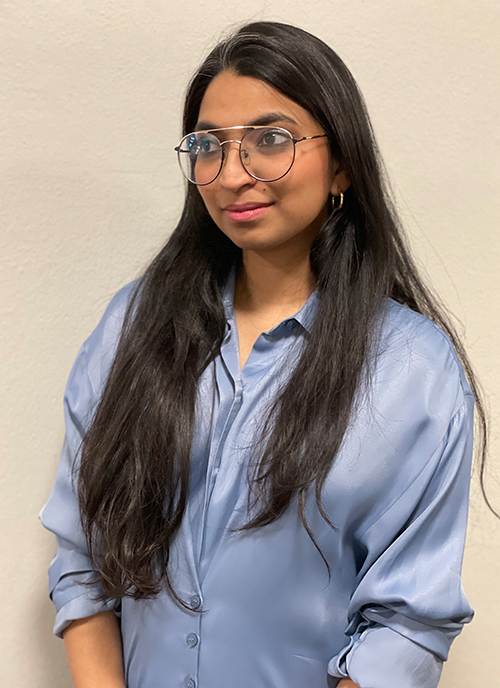
Oona Natesan: Costume Designer, Critical Thinker, and Creative Powerhouse

by Mukta Phatak
We’ve all seen it: the elaborate lion headpiece, the epic four-man dragon puppet, two actors inside of a horse costume, an adorable child in a too large hat with foam cat ears, even the occasional actual dog on stage (I’m looking at you, Dorothy!). 

Having animals on stage is an invitation for creative solutions and designs, and Oona Natesan – our costume designer – dove deep, creating exquisite, specific and visually sumptuous looks for our Jungle creatures. 

When I sat down with Oona to get a sense of how she approached these characters, at first she was a bit nervous – would I follow the intricacies of her thought process? In other words, was she making sense? I was busy fangirling over her brilliance, so to make sure I would pay attention, she pulled up her deeply researched, abundantly metaphorical designs and let her work do the talking. 

"..I was interested in drawing a parallel between what humans are doing to the animals in the play and what humans are doing to both animals and indigenous tribes in the world, through my costume design"


Oona: So, the crux of this design process was that we didn’t want to try and make the actors look like real animals, because the movement would do part of that storytelling. It was a blend of hints at the animals and hints at a deeper message.

Mukta: That being?

Oona: Well, to start with, all of my designs are based in the indigenous tribes of the regions from which each animal is from. India is home to so many animals – and is home to a great many tribes and regions too. So, in my costuming for each animal, there are direct references to the indigenous tribes of regions that each animal is mainly found in. 

My work in uplifting these indigenous crafts and traditions is to try to bring attention to the fact that these ancient communities still exist and that we are hurting them with things like urbanization, and draining their resources through our actions.

In the play, we see how humans have encroached on the jungle and are forcing claims on the space of animals – this is a core conflict in the show. That’s a familiar story to indigenous tribes and I was interested in drawing the parallel between what humans are doing to the animals in the play and what humans are doing to both animals and indigenous tribes in the world, through my costume design. 

"..it made me wonder, what other erasures exist outside of the ones in this story?"

Oona drew a perfect thread (pun intended), weaving all the complexities of this script’s retelling into her art form (ok, I’m sorry, I’ll stop). She is honoring the original text’s setting, and infusing it with deeply researched authenticity thus reclaiming the story into a South Asian space. 

It doesn’t stop there though – with the added layer of indigenous clothing, I found myself wondering how I could help indigneous tribes and animals reclaim their space, the same way The Jungle Book: Rudyard Revised is reclaiming the South Asian narrative of the story – something that means a lot to me as a South Asian creative. 

It made me wonder (and will make audiences wonder) “what other erasures exist outside of the ones in this story? Am I participating in them? What can I do to learn more, and uplift those who need to be heard?”.

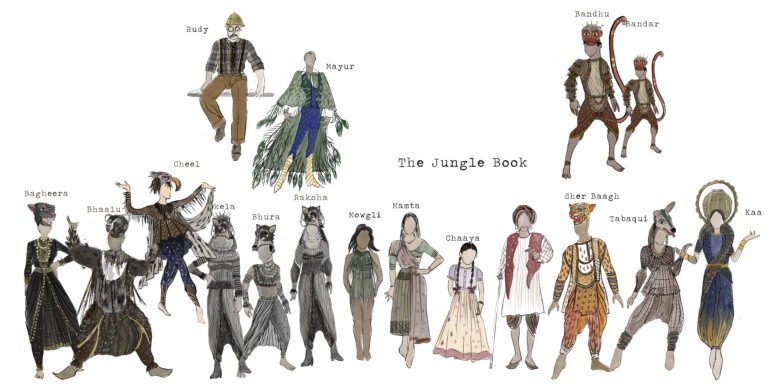
As I was still reeling from all of these questions, Oona calmly proceeded to walk me through her incredible research images and renderings. I am including a few snapshots into her in-depth and well thought out process below, and to enjoy the rest you’ll just have to come see the show. 
The Wolves

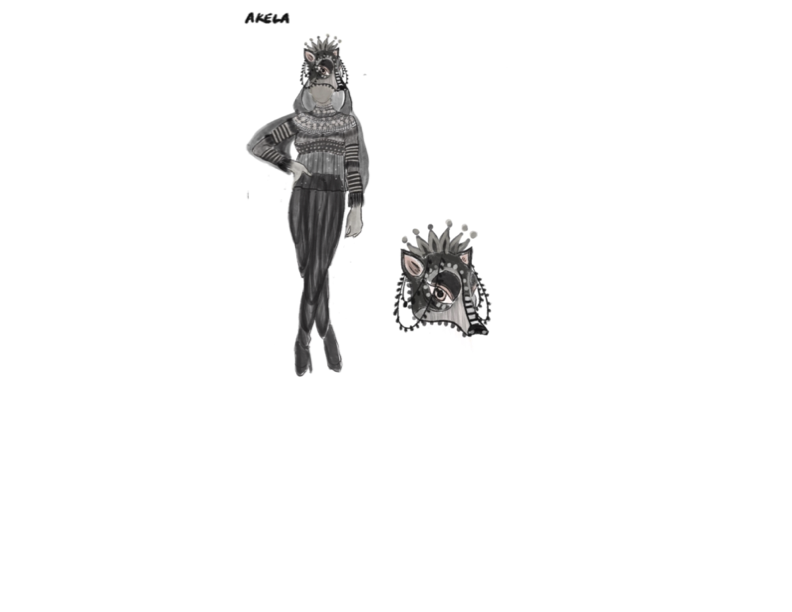
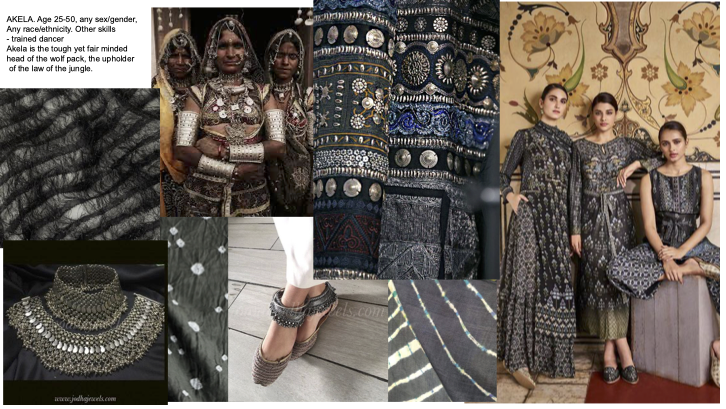
Oona: Wolves are from Rajasthan. I based their costumes on the Lambadi tribe, lots of gray and black accented with oxidized silver accents and jewelry. Wolves roam in packs, and the Lambadi tribe does too.
As such, Akela, Raksha, and all the wolves are dressed in gray and black with coins as embellishments and lots of jewelry. They are high-status and wear specific jewelry to show they are Lambadis – and that is reflected in the costuming.

I looked this up afterwards – apparently the Lambadi are historically known to be nomadic wanderers – a tradesman tribe that roams all over the Deccan in groups. Sounds like wolves to me!

Oona: We used bandhani techniques for the wolves which is something that is very particular to Rajasthan. Even the textiles we used are sourced from every region in India in which the animals are found. I was very specific in doing that.
Tabaqui the Jackal

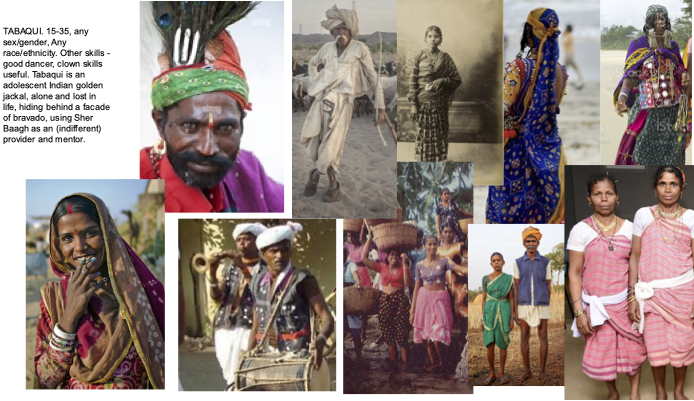
Oona: We approached Tabaqui as a character in relation to the wolves – in some ways rather like their lower status cousin. We drew from similar tribes to the wolves, but used rustic, earthy and muddy colors to show that he is not of the same level as the wolves in the jungle. 
Some inspiration was from the tribes of Gujurat and Goa, where the jackal is found. The way Tabaqui’s costume is draped was also adjusted, since every region of India has its own style of draping.
Bagheera the Panther

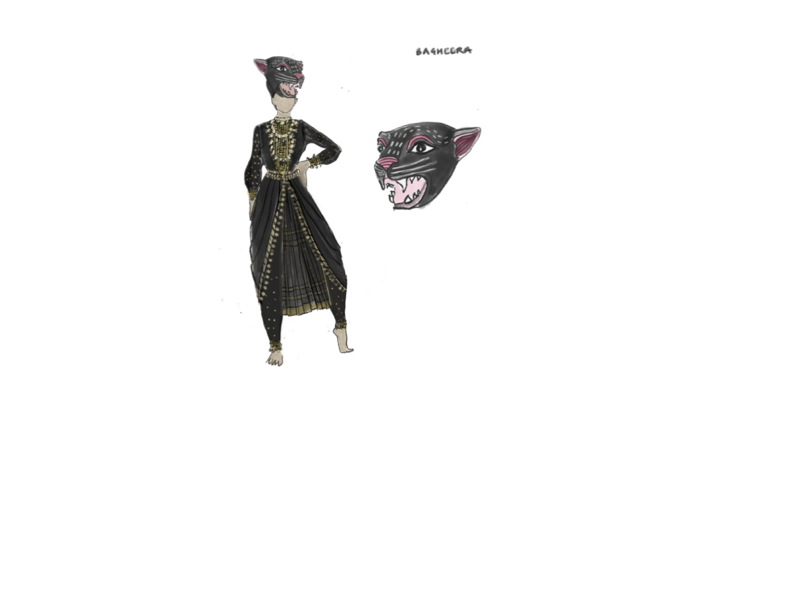
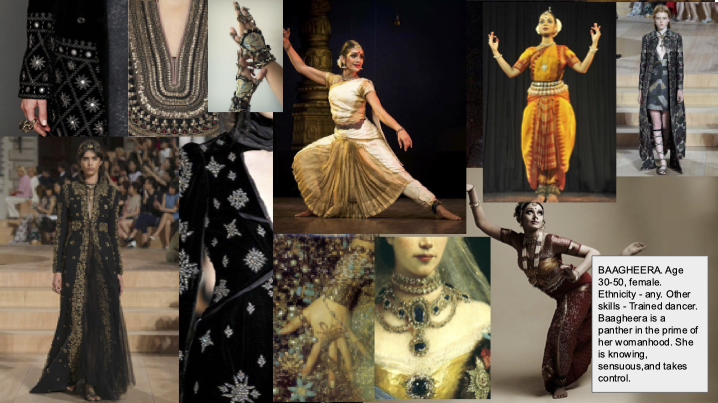
This is where the theater design element came into play, since Bagheera is a trained dancer. This inspired Oona as she went into the design process filled with images of Bharatanatyam, an ancient classical Indian dance tradition. 

Oona: Bagheera is fearless, and powerful. She has a regal pride and a certain sensuality in her power, so there is a lot of gold and grace to her design. 
If you look at the silhouette of most actual animals and compare it to a human – it is immediate – you see that humans have much longer legs.

I now can’t unsee that, by the way. Imagine a tiger but with proportionately human length legs. Now imagine that same thing but on a bear.

Oona: So, we tried to reduce the legs of all the animal characters, including Bagheera’s. We used low crotch drop dhoti pants, and increased the amount of volume in the legs, so that from the audience they have the silhouette of animals.
Kaa the Snake

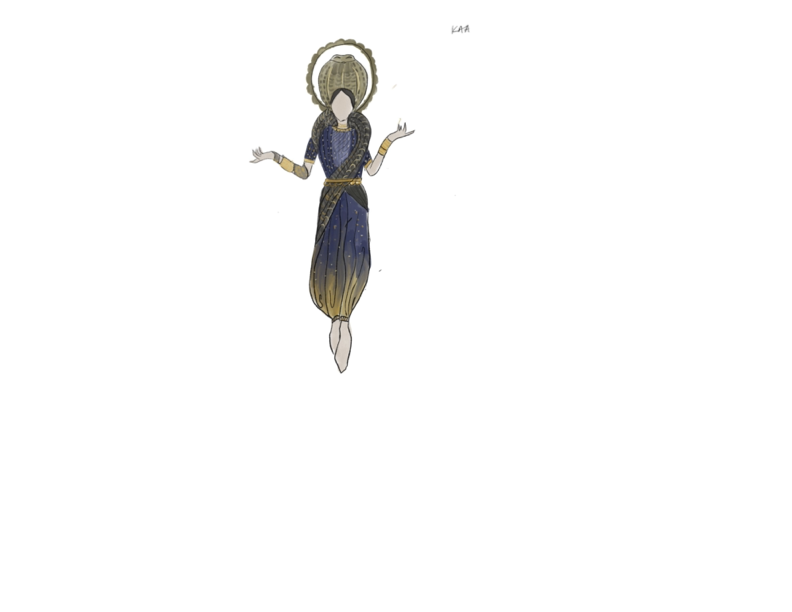
Kaa is being played by Dr. Anita Ratnam, an internationally recognized visionary dancer and artist. When Oona approached designing this character, she realized that there was something mythological about Kaa – hard to pin down and existing outside of the main plot of the story.

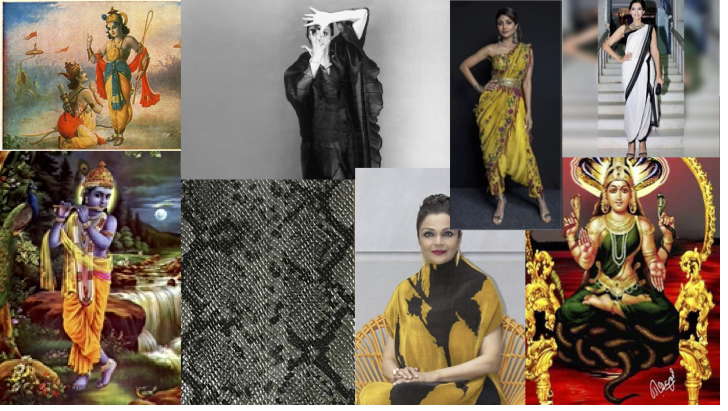
Oona:  Culturally, the snake is either deeply worshiped or considered extremely poisonous in India. It’s given a lot of attention and sometimes adulation because it is the symbol of Lord Vishnu, a Hindu deity, who wears a snake around his neck. 

Natesan also looked to one of Lord Vishnu’s incarnations, Lord Krishna, who in Hindu mythology often comes in and changes the narrative of a story. 

Oona: This is just what Kaa does in the Jungle Book – you are never sure whose side she’s on, and when she appears she makes you question what you thought was going to happen in the plot.
We sourced an ikat print – which is a very famous textile of India – that looked like the patterns of a snake. We used it as a sari and draped it in a way that coiled and spiraled all over her body.
Sher Baagh the Tiger

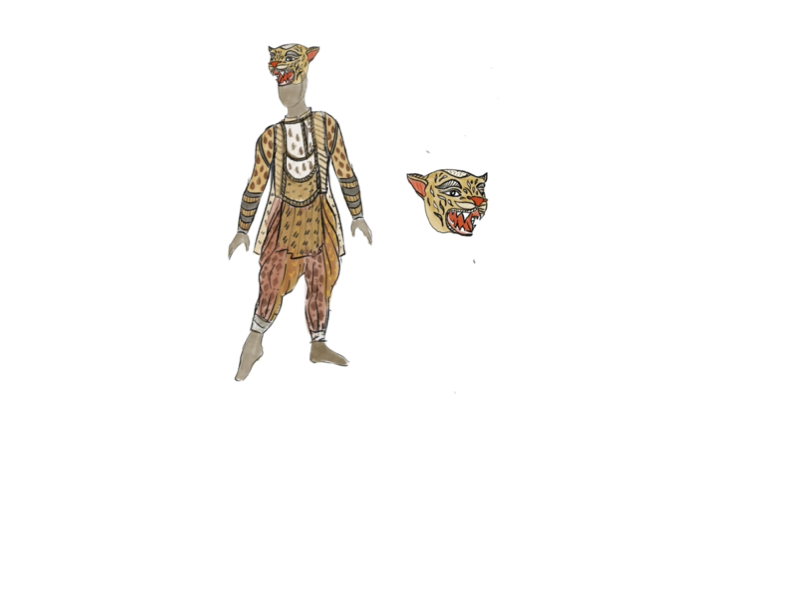
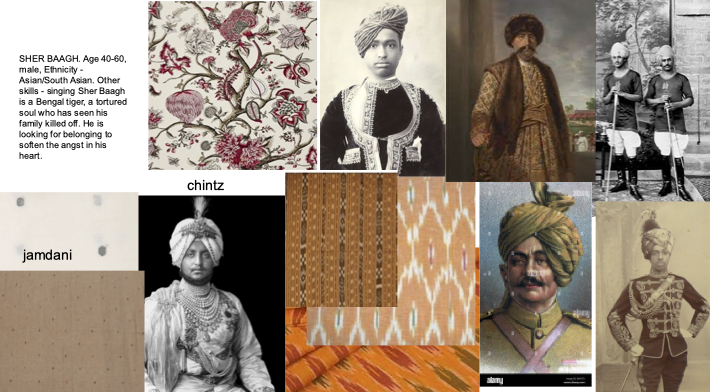
Textile wise, the Sher Baagh fabrics scream tiger. Sourced locally once again, the ikat print is iconic in its Indian-ness and its orange and black tiger-like print.

Oona: The ikat print is actually a really hard weave, because the thread is dyed before weaving. This intricacy and the fact that it is a very native print to Bengal made me interested in it for Sher Baagh, because he is a very complicated, somewhat delicate character. 
The Bengal tiger is also such a royal creature, and I see Sher Baagh as a sort of fallen nawab (king/ruler from the precolonial era). When the British empire colonized India, a lot of nawabs were either forced to assimilate in order to survive, or revolted and were killed. So, that image was really compelling to me when looking at Sher Baagh.

Oona went on to explain the colonial history of tiger hunting. When the British colonized India, with them came British gamesmen who prized tiger skins and poached tigers throughout their rule.

Looking at how the tiger’s conflict with the British Empire paralleled the nawab’s conflict with the British Empire led Oona to design Sher Baagh’s silhouette into one that looks much like a nawab – with a turban, some jewelry and all based in that beautiful tiger-like ikat print.
Mowgli

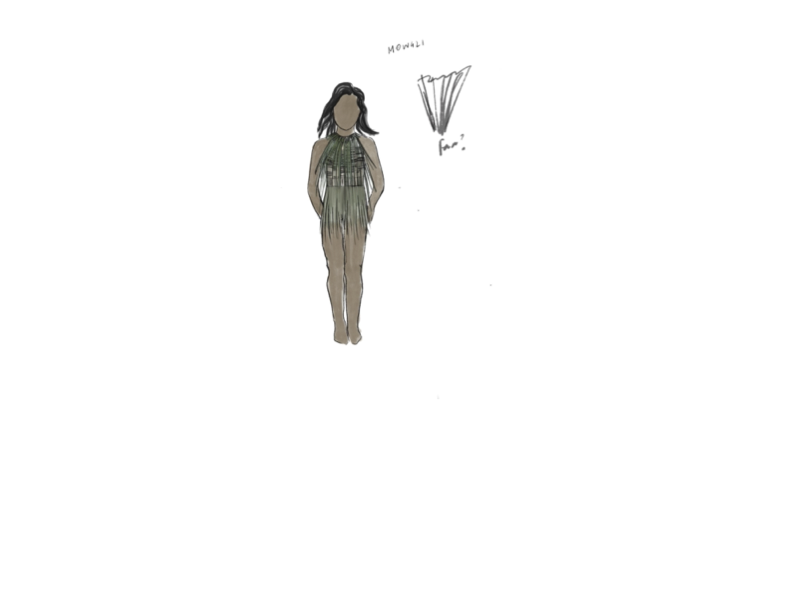
Oona: Mowgli is the only character I dressed in green, because it is a camouflage color. In a way, Mowgli is constantly having to blend and morph in order to fit in. 
The fabric I used was also a typical cotton found in villages in the 1800s. In those days, fabric was really expensive and it made no sense to cut fabric – it was just draped over the body. 

These days, the styles of wearing saris always include a “blouse” and “petticoat” – two words that were brought to Indians by the British – who told them that wearing clothing without a blouse and petticoat was uncivilized. 

Oona: It was important to me to reclaim the original styles of draping fabric – and you see that in Mowgli’s very earthy, organic drapes. 
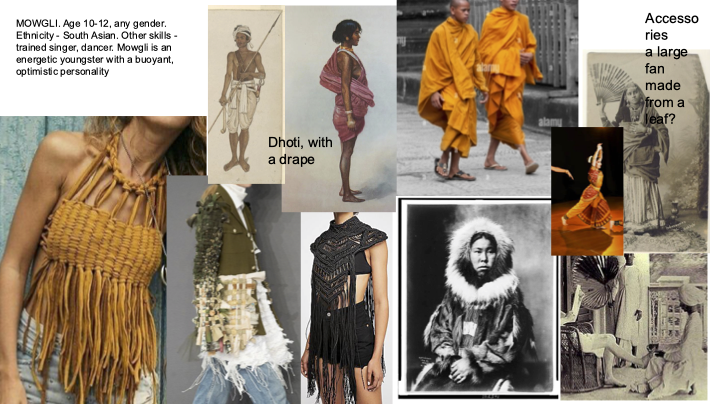
Oona’s costume work on the show is masterful – it is rich in detail, steeped in research and the core thesis of the play, and visually stunning on stage. We are so lucky to have her practiced eye on our creative team. Come see this craftswoman’s work on display throughout the performances of The Jungle Book: Rudyard Revised! 

About Oona
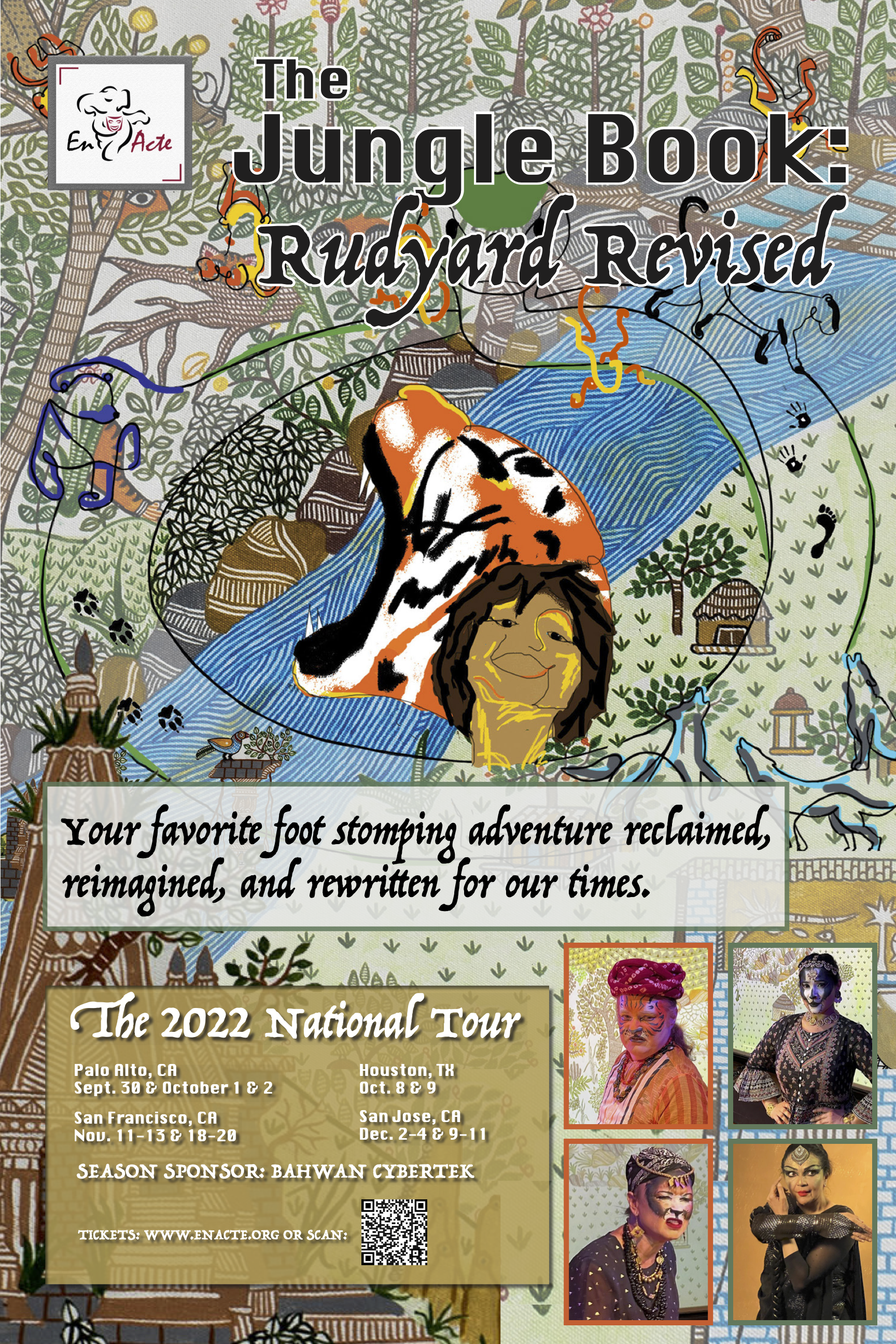
Oona Natesan is a multidisciplinary designer with deep experience in costume and digital design. Oona has a Master’s in Costume Design from the Carnegie Mellon School of Drama. Before moving to the US she worked as Assistant Designer for Manish Malhotra, the iconic and eclectic Indian designer best known for his international couture and creations for the Bollywood glitterati. 

The Creative Process: Writing with Collective Wisdom

Every year, the EnActe Conservatory chooses a text to study and adapt into a piece of theater that explodes out from the source material. In 2019, the students decided on The Jungle Book. The beloved classic was originally written by Rudyard Kipling (a white, British man) and later adapted into its most well-known contemporary form, the Disney movie musical (a white-led company). Catch the drift?

The Research

Fourteen authors aged 6 to 66 spent three months researching and understanding Rudyard Kipling’s complex history with the Indian subcontinent, as well as how the original tale celebrates and yet still erases parts of the jungle in which it is set. 

Students considered modern theories of appropriation while also getting to know Kipling’s own feelings of abandonment, struggles with identity, and how India played a role in him finding a sense of belonging and home through the research provided by our dramaturg, Rashina. 

These decades-spanning writers grappled with the complexities of what Kipling intended versus what his impact ended up being. And collectively, they wrote a beautiful show imagining how Rudyard might have told this story if he were aware of all of these things today. 

Outside of the writers room, students faced a raging pandemic, a collapse of infrastructure surrounding public health, the Black Lives Matter and MeToo movements, refugee stories, tiger extinction concerns, climate crises with raging wildfires across parts of North and South America, and the increasing discussion around BIPOC representation in the arts. 

Pawprints (forgive the pun) of this holistic approach to reimagining the original text are scattered throughout this revision of The Jungle Book – a story that has always been about a community at odds with itself, its beliefs, and its relationship with the community next door. 

Revising Rudyard

The Conservatory’s research into Rudyard’s own journey as a neglected child and his ultimate problems as a white, colonialist writer led them to invite him into the story as a character capable of change and growth. Rudyard is a character in the piece – quite literally revising his own work on stage – all using words written for him by a well-researched, authentic and vastly diverse community of artists. 

Drawing from the text we formed songs and scenes using some of Kipling’s original poetry infused with the students’ ideas and concerns. This framework allows for the joy of the original story and all of the lessons contained within it, as well as the added representation of how art – and indeed, community – can continue to evolve. 

Telling the Tiger's Tale

The way the tiger is framed in the original neglects to acknowledge the realities of tiger extinction and the trauma that tigers themselves have faced. The Sher Baagh in this piece is “in a lot of pain,” as the actor portraying him – Karsten Freeman – put it. He is languishing in the jungle, the last of his species, as he watches the human village continue to drive him and other animals of the jungle to extinction. 

After years of this trauma and watching his family get consumed by the human’s fear and violence, he is in no place to accept a human child like Mowgli into the heart of the jungle – the only place he feels even a little bit safe. 

In many ways, Sher Baagh and Mowgli both are on a journey towards finding community, acceptance and healing after a life of abandonment. Whereas in the original telling Sher Baagh is portrayed as the vicious villain in the forest, we are hoping to use our art to dismantle that problematic stereotype of man vs. tiger. 

We are partnering with Centre for Wildlife Studies’ Tiger Conservation efforts in India to help inform our storytelling as well as to uplift the work they are doing towards a sustainable coexistence between village and jungle. Read more about their work here: https://cwsindia.org/

Dreams for the Jungle

Our story imagines what it might be like if we could find a way to understand the history and baggage of all creatures – in this case, Sher Baagh, Mowgli, and even Rudyard himself. The process of writing our revision was inherently modern, filled with conversation, reclamation, and constant learning. As we explored this beautiful story, we wrote into it our dreams about how we might live sustainably and joyfully in community with ourselves, our neighbors and the earth. Oh, and we had boatloads of fun.

EnActe Arts Company Manager

EnActe Company Manager

Rapidly growing national theater company co-located in Houston/Silicon Valley currently has an opening for a Company Manager.

Responsibilities:

Primary responsibilities will include but not limited to 

Manage the schedule and task list of the Artistic Director, including attending meetings and ensuring follow up tasks are done in a timely manner

Manage the physical assets of EnActe – office space, cafeteria, food and drinks etc

Manage the digital assets of EnActe – photos, videos and digital content.

Manage and attend all EnActe events, especially fundraisers and gratitude events.

Manage  travel for all staff and artists – responsible for making arrangements including airline, hotel, and rental cars.  

Manage accounts, e-filing, receipts and ordering of supplies and printing jobs etc. 

Preferred Qualifications:

Must have

Excellent calendar management skills, including the coordination of complex executive meetings.

Excellent computer skills –
Strong knowledge of complete Google Suite and MS Office, including Word, Excel, PowerPoint and Outlook.

Experience scheduling travel arrangements for management and creatives.

Interest in the artistic and cultural landscape in USA

Must be:  

EXTREMELY efficient, organized and resourceful.  

Flexible timewise during event/show days. 

Able to function well in high-pressure situations.  

Must have:  

Great interpersonal skills; ability to deal with many personalities

Strong follow through capabilities,.  

Strong decision making skills, 

Strong Communication skills, 

Own car and clean driver’s license.

Compensation:

PART TIME POSITION

5 hrs/day, 5 days per week, hybrid.

Compensation $20 per hour.


Rehearsal Pianist The Jungle Book, Rudyard’s Revision

Rehearsal Pianist, The Jungle Book: Rudyard Revised

The Rehearsal Pianist is a vital part of the rehearsal staff of EnActe’s Arts’ original musical production of The Jungle Book: Rudyard Revised. The Rehearsal Pianist reports to the Vocal Director, and works closely with them to provide piano accompaniment to all vocal rehearsals as required by the Vocal Director. All rehearsals will be held in person at EnActe Arts offices in Sunnyvale, CA or another nearby rehearsal space.

Responsibilities:

Facilitate communication in and between the cast and all production/rehearsal departments

Attend weekly production meetings and take notes

Attend designer run and all technical and dress rehearsals

Attend all blocking and choreography rehearsals. Attend vocal rehearsals as needed.

Provide rehearsal and performance reports for all rehearsals and performances

Provide daily calls for all rehearsals and performances. Provide

Manage technical/dress rehearsals and performances

Call cues during technical/dress rehearsals and performances

Remain supportive of actors (new and experienced) throughout the rehearsal process

Adhere to EnActe Arts policies pertaining to work around the production

Qualifications:

Experience playing as a piano accompanist in a live performance environment (musical or theatrical)

Availability for regular weekday evening and weekend afternoon rehearsals beginning July 30, 2022 and ending September 24, 2022.

Must be available for up to three rehearsals per week.

Availability for a designer run in September (currently scheduled for September 18, 2022)

Punctuality and strong communication skills
Familiarity with Google Drive and DropBox

Ability to sight-read piano sheet music and provide piano accompaniment to singer(s) as needed

Dedication to fostering talent in a secure and supportive environment

Commitment to establishing and maintaining a safe and inclusive environment for all cast, crew, and staff members, regardless of race/ethnicity/religion/age/income/sex/gender/sexual orientation or other identifier

Preferred Qualifications:

Experience playing as a rehearsal pianist for a live theatrical performance, in a performance or rehearsal environment

Experience working with children and actors of all ages

Compensation:
This is an W-2 Seasonal Employee position that pays $20.00 per hour.

Costume Manager, The Jungle Book, Rudyard’s Revision

Costume Manager, The Jungle Book: Rudyard Revised

The Costume Manager is a vital part of the rehearsal staff of EnActe’s Arts’ original musical production of The Jungle Book: Rudyard Revised. The Costume Manager reports to the Production Manager, and works closely with them to ensure timely progress in all responsibilities relating to the crafting and altering of costume pieces and accessories. While meetings will be held over Zoom and may be taken remotely, all rehearsals will be held in person at EnActe Arts offices in Sunnyvale, CA or another nearby rehearsal space.

Responsibilities:

Attend weekly production meetings

Attend designer run

Craft and alter costume pieces and accessories as needed throughout the production/rehearsal process and performance run

Organize costume pieces and accessories as needed throughout the production/rehearsal process and performance run

Work closely with the Production Manager to ensure safe and timely transportation of all costume pieces and accessories

Remain supportive of actors (new and experienced) throughout the rehearsal process

Adhere to EnActe Arts policies pertaining to work around the production

Qualifications:
Experience with tailoring clothing pieces and accessories

Availability for weekly design/production meetings from late July 2022 through mid-September 2022

Punctuality and strong communication skills

Familiarity with Google Drive and DropBox

Dedication to fostering talent in a secure and supportive environment

Commitment to establishing and maintaining a safe and inclusive environment for all cast, crew, and staff members, regardless of race/ethnicity/religion/age/income/sex/gender/sexual orientation or other identifier

Preferred Qualifications:
Experience working in a theatre costume shop as a stitcher, draper, or costume shop lead

Experience altering South Asian garments and/or crafting costume pieces from South Asian fabrics

Experience working with children and actors of all ages

Compensation:
This is an 1099-MISC independent contractor position that pays a lump sum of $1,000.00.

Stage Manager, The Jungle Book, Rudyard’s Revision

Stage Manager, The Jungle Book: Rudyard's Revision

The Stage Manager is a vital part of the rehearsal staff of EnActe’s Arts’ original musical production of The Jungle Book: Rudyard Revised. The Stage Manager reports to the Production Manager, and works closely with them to ensure timely communication and progress in all responsibilities among the production staff. While meetings will be held over Zoom and may be taken remotely, all rehearsals will be held in person at EnActe Arts offices in Sunnyvale, CA or another nearby rehearsal space. Technical and dress rehearsals will be held in various theaters across the Bay Area and Houston, TX (see details below).

Responsibilities:

Facilitate communication in and between the cast and all production/rehearsal departments

Attend weekly production meetings and take notes

Attend designer run and all technical and dress rehearsals

Attend all blocking and choreography rehearsals. Attend vocal rehearsals as needed.

Provide rehearsal and performance reports for all rehearsals and performances

Provide daily calls for all rehearsals and performances.

Provide weekly rehearsal schedules in accordance to the established rehearsal calendar.

Manage technical/dress rehearsals and performances

Call cues during technical/dress rehearsals and performances

Remain supportive of actors (new and experienced) throughout the rehearsal process

Adhere to EnActe Arts policies pertaining to work around the production

Qualifications:

Experience stage managing a live theatrical production

Availability for weekly design/production meetings from late July 2022 through mid-September 2022

Availability for regular weekday evening and weekend afternoon rehearsals beginning July 30, 2022 and ending September 24, 2022

Availability for a designer run in September (currently scheduled for September 18, 2022)

Availability for tech and dress rehearsals on the following dates:
Sept. 26 – Sept. 29, 2022 (Cubberley Theater, Palo Alto, CA)
Oct. 6 – Oct. 9, 2022 (Match Theater, Houston, TX)
Nov. 7 – Nov. 10, 2022 (Cowell Theater, San Francisco, CA)
Nov. 28 – Dec. 1, 2022 (Hammer Theater, San Jose, CA)

Punctuality and strong communication skills

Familiarity with Google Drive and DropBox

Dedication to fostering talent in a secure and supportive environment

Commitment to establishing and maintaining a safe and inclusive environment for all cast, crew, and staff members, regardless of race/ethnicity/religion/age/income/sex/gender/sexual orientation or other identifier

Preferred Qualifications:

Experience with stage managing live theatrical musicals

Experience working with children and actors of all ages

Compensation:
This is an W-2 Seasonal Employee position that pays $20.00 per hour. Lodging in and transportation to/from Houston, TX will be provided by EnActe.

Video Editor

Video Editor

JOB DESCRIPTION:
  • Part time, film and video editor
  • The editor will produce virtual EnActe theatrical content – cine plays and short films, marketing and training videos and  EnActe School of Drama content.
  • 20-25 hours per week
 
JOB DUTIES:
  • Working with the EnActe Arts production team to produce cine plays and virtual theatrical productions and possibly, short films.
  • Working with the marketing manager to create marketing and advertising videos for EnActe’s productions, programs and organization. This may include trailers, ads and promotional material. 
  • Working with the director of the EnActe School of Drama to create marketing and advertising videos for EnActe’s various education programs. This also includes final basic edits on students’ video projects. 
  • Developing in-house training videos for workflows and processes.


HOW TO APPLY:

To apply: Fill out the form below or send in your application via email to jobs@enacte.org 

If emailing, please state: Application for Video Editor Position in the subject line 

Please explain, in brief, your motivation in working for EnActe Arts, and attach a current resume with all relevant experience listed.

EnActe Arts is an equal opportunity employer and encourages applications from all qualified candidates. Start date is immediate.

MUST  HAVE
  • The candidate must have their own computer editing system with a graphics card capable of handling 4K video editing and export.
  • A professional attitude with acute attention to detail
  • Knowledge of the methods, practices, techniques, materials, tools and equipment used in video editing
  • Excellent communication and collaborative skills with a demonstrated ability to work with a diverse and distributed team.


GOOD TO HAVE
  • One to three years of experience working as a video editor in a theatre or film context.


KEY SKILLS

  • Competency in editing workflow using Adobe Creative Cloud (Candidates that do not use Adobe Creative Cloud but another equivalent software may be considered, but knowledge of Adobe is highly recommended)
  • Video editing (using Adobe Premiere Pro)
  • Exporting (through Adobe Media Encoder)
  • Knowledge of basic VFX including chromakey (using Adobe Premiere Pro or Adobe AfterEffects)
  • Knowledge of basic color grade including brightness/contrast adjustment, curves adjustment, hls adjustment, and letterboxing (using Adobe Premiere Pro or Adobe AfterEffects) 
  • Basic sound editing skills (noise reduction, volume normalization) in Adobe audition
  • Basic knowledge of legality surrounding usage of royalty-free music, sound effects, and video. 

All for One, One for All


We partnered with eighteen amazing performing arts organizations in Silicon Valley to cooperatively raise funds. Art is the first responder for the soul. This Giving Tuesday we are honored to be part of an amazing group of Bay Area Performing Arts Organizations that have been bringing the healing power of Art to us this year. Knowing that this is the first time any South Asia focused organization has been invited to the table, we are excited to share the gift of caring and generosity that is an integral part of South Asian culture. 

Our story is inextricably entwined with the ethos of Silicon Valley ~ so many of us live here, work here, raise our children here. We invite all those that care about what EnActe stands for to step up for the Arts and support our local arts organizations and artists by donating to the gofundme campaign.

A Dive into History with Letters

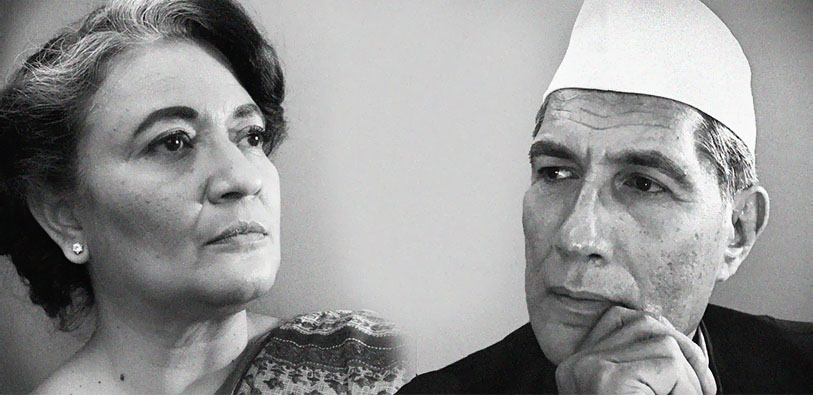
As the Pandemic forced us to shut our physical doors we found several new windows to open. We produced our first Cine-Play in collaboration with Stagesmith Productions. We adapted Lavonne Mueller’s Letters to a Daughter from Prison, based on the letters between Jawaharlal Nehru and Indira Gandhi in the backdrop of India’s freedom movement. An intimate relationship and poignant encounter with the words that are all that this father and daughter had, to construct a relationship that goes beyond words. 

Read about Letters on Broadway World and on the Asian Variety Show e-zine!

In The News: EnActe series spotlights women performers, playwrights

This year we launched our program for women performers and playwrights. Women EnActe for Themselves, or WEFT, presented its first show “Art of the Possible” by Indian writer Reena Kapoor. WEFT is “designed to support women writers on women’s issues, taking their emerging stories to completion.”

Mercury News highlighted WEFT and our Beyond the Box programs. Check out the article here  to learn more!